
Asking the parties to participate in the mediation proceedings with an open mind, the apex court said they may not make any statements in the public and may not go on social media about the dispute.
The Supreme Court has granted anticipatory bail to a software firm owner accused of sexually harassing an employee and attempting to frame her and her husband in a criminal case. The court has directed him to cooperate with the investigation and not to influence witnesses.

The father had approached the Supreme Court in 2024 seeking passive euthanasia for his son. The court had then declined to grant relief.

The Supreme Court has agreed to hear a plea on May 29 seeking a direction to the Nagpur Parsi Panchayat to treat a Parsi woman equally with her male counterparts, even after she marries a person of another faith, challenging a rule that allegedly strips Parsi women of their religious identity upon inter-faith marriage.

The Supreme Court questioned a woman's sexual assault claim against her former live-in partner, highlighting the consensual nature of their relationship and the absence of a marriage bond.

The Supreme Court has granted bail to a doctor arrested for allegedly tampering with blood samples in the Pune Porsche crash case, where a minor is accused of killing two people.

The Supreme Court of India has refused an urgent hearing on a plea seeking an investigation into allegations concerning fake advocates and the activities of the satirical digital outfit 'Cockroach Janta Party' (CJP), with the Chief Justice advising the petitioner not to take the issue 'so sentimentally'.

The Supreme Court of India will commence hearings on two significant constitutional matters: the interpretation of legislative privileges of MLAs concerning freedom of speech and expression, and the power of state legislatures to impose additional sales tax levies. Both issues will be heard by seven-judge Constitution benches, with one case stemming from a 2003 plea by journalist N Ravi regarding breach of privilege.

The Supreme Court of India has expressed concern over the continued prevalence of domestic abuse and crimes against women, highlighting that these issues are symptomatic of a deeper societal problem rooted in patriarchy, despite economic and legal advancements.
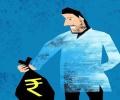
The Supreme Court has scheduled a July hearing for the Rs 500 crore money decree case involving Ras Al Khaimah Investment Authority (RAKIA) and industrialist Nimmagadda Prasad, following the failure of a mediation process led by former Chief Justice of India U U Lalit.

The Supreme Court has quashed an FIR and subsequent proceedings against YouTuber Elvish Yadav, who was arrested for allegedly using snake venom at a rave party in Noida. The court cited issues with the applicability of the NDPS Act and the validity of proceedings under the Wildlife (Protection) Act.
The Supreme Court has declined to hear a plea challenging the denial of parole extension to Santosh Kumar Singh, convicted in the 1996 Priyadarshini Mattoo murder case, while the Delhi High Court is already reviewing the matter.

The Supreme Court of India has granted bail to Kashmiri separatist leader Shabir Ahmed Shah, who has been in jail for over eight years in a terror funding case, citing the unlikelihood of a timely trial conclusion and the curtailment of personal liberty.

Chief Justice of India Surya Kant asserted that the judiciary cannot be browbeaten, during a hearing on a plea against a political march to the Supreme Court by Rahul Gandhi and other opposition leaders on October 12. The plea alleges an attempt to obstruct the judicial system and seeks a ban on political demonstrations within court premises. The court has issued notices to the leaders and ordered the preservation of CCTV footage from the incident.
Supreme Court Justice V Mohana recused herself from a 2016 Public Interest Litigation (PIL) seeking directions for the speedy disposal of criminal cases against lawmakers. This development follows a report by amicus curiae Vijay Hansaria, which revealed over 4,000 pending criminal cases against Members of Parliament (MPs) and Members of Legislative Assemblies (MLAs), including chief ministers from 14 states. The Supreme Court has previously issued directives to high courts to establish special benches to monitor and fast-track these trials.
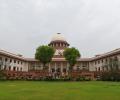
The Supreme Court has refused to stay contempt proceedings initiated by the Bombay High Court against a judicial officer for an "unwarranted outburst" in court. The apex court observed that a judicial officer cannot shout at judges and deemed the officer's conduct as "gross indiscipline," advising him to tender an unconditional apology to the High Court. The High Court had initiated proceedings after the officer allegedly blamed the court administration in a high-pitched tone during a hearing on fast-track court posts.

The Supreme Court has agreed to hear an application alleging that Congress leader Rahul Gandhi pushed a pregnant journalist during a march to the apex court on October 12. The matter was mentioned by senior advocate Gaurav Bhatia, who stated the journalist was three months pregnant and required hospitalisation. The court will hear the application on October 26 or October 27, alongside other pleas related to the October 12 march and electoral roll irregularities.
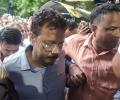
The Supreme Court has granted bail to Sandip Ghosh, former principal of RG Kar Medical College Hospital, who was accused of financial irregularities and manipulating merit scores. The decision was based on his two-year incarceration and the slow progress of the trial, with only 7 out of 147 witnesses examined so far.

The Supreme Court has issued notice to the Election Commission and its chief regarding a plea by Sanjay Raut and 12 others, including Rahul Gandhi, concerning alleged irregularities in electoral roll revisions. The court provisionally entertained Raut's petition but stated he would need to explain his conduct, while also addressing allegations of attempts to 'browbeat' the judiciary.

The Supreme Court has permitted the Unnao rape survivor to become a party in the CBI's petition challenging the suspension of Kuldeep Singh Sengar's life imprisonment, affirming the victim's right to be heard in the proceedings.
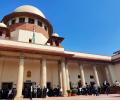
The Supreme Court has made permanent its order protecting a journalist from coercive action in a road rage case and quashed a police notice to 'X' seeking his digital details. The court noted the police sought data from before the alleged crime and granted the journalist liberty to challenge the FIR and seek guidelines for data collection.
The Supreme Court has agreed to constitute a special bench to address the Centre's plea regarding the applicability of its March 11 judgment on OBC creamy-layer criteria to candidates of the Civil Services Examination (CSE) 2025. The Department of Personnel and Training (DoPT) seeks to proceed with service allocation for 958 recommended candidates based on the creamy-layer determination applied before the verdict, citing potential unequal treatment and disruption to training schedules.
The Supreme Court has disposed of a long-pending case concerning legislative privileges and freedom of speech, deeming it infructuous due to the Tamil Nadu Assembly withdrawing its resolution against journalists. However, the seven-judge bench has kept the substantial legal questions regarding the interplay of fundamental rights and legislative privileges open for future adjudication.

The Supreme Court of India has sought proposals for establishing a permanent financial corpus to support patients suffering from Spinal Muscular Atrophy (SMA), a rare genetic disorder requiring expensive treatment. This initiative follows an earlier case involving comedian Samay Raina, which led the court to examine broader systemic concerns for SMA patients.

The Supreme Court has ruled that borrowers are not entitled to a personal hearing before banks classify their loan accounts as "fraud" under RBI directions, clarifying that a written response to a show-cause notice and access to the forensic audit report (with redactions) are sufficient for natural justice.

The Supreme Court has granted the Centre an extension until October 15 to file its response on petitions concerning the closure of metro stations and disruption of train services in Delhi during protests against Chief Election Commissioner Gyanesh Kumar and the Special Intensive Revision of electoral rolls. The court also deferred a crucial hearing, issued notice on a petition challenging the immunity of election commissioners, and sought a Delhi Police officer's presence regarding alleged assaults on women journalists. Earlier, the court had directed authorities to ensure normal public transport and prevent unlawful detentions.

The Supreme Court has directed the Delhi High Court to reconsider a plea by 11 members of the Delhi Gymkhana Club challenging the Centre's decision to take over 27.3 acres of land leased to the club and subsequent eviction proceedings. The members argue that the government-nominated management cannot effectively challenge the Centre's actions, which they deem a "colourable exercise" of power and a violation of fundamental rights.

The Supreme Court has agreed to examine a plea seeking the recall of its recent split verdict regarding the 2023 law on the appointment of the Chief Election Commissioner and Election Commissioners. This law notably excludes the Chief Justice of India from the selection panel, a change from a previous Supreme Court directive.
The Supreme Court has directed the Centre, states, and Union Territories to swiftly establish dedicated courts to handle the "alarming rise" in cases under the Narcotic Drugs and Psychotropic Substances (NDPS) Act. The directive aims to set up all 449 required NDPS courts within six weeks. Additionally, the court noted progress in establishing special courts for cases probed by the National Investigation Agency (NIA), with several states committing to expedite their operationalisation.

Gurugram police have arrested three individuals, including two female domestic helpers and their male accomplice, in connection with the alleged sexual assault of a 3-year-old girl. The arrests follow a Supreme Court decision to hear a plea for a CBI or SIT investigation into the case.
The Supreme Court clarified on Monday that it had not adjudicated on the new Form 6, used for inclusion in electoral rolls, during its hearing on the Special Intensive Revision (SIR) of electoral rolls in Bihar. This clarification comes after the Election Commission's press release suggested the apex court had upheld the Form 6 declaration.

The Supreme Court has sought responses from the Election Commission and Chief Election Commissioner Gyanesh Kumar regarding a plea filed by Congress leader Rahul Gandhi and 12 other opposition leaders concerning alleged large-scale voter deletions and Special Intensive Revision (SIR) irregularities.

'My argument was straightforward: If the Constitution allows this reservation and SC/ST and OBC candidates are already getting reservation in private institutions -- backed by Constitution Bench orders -- then not extending the same to EWS candidates directly violates the 103rd Amendment and Article 14, which guarantees the right to equality.'

The Supreme Court on Sunday issued a notice to the Centre and passed several directions regarding metro and train services, internet access, and peaceful assembly in Delhi, following a plea for contempt proceedings over alleged violations during the CJP protest. The court emphasised the protection of fundamental rights and the need for lawful conduct during protests.

A new bench of the Supreme Court will hear on Thursday the plea of social activist Teesta Setalvad.

The Supreme Court has said that selling land or property is not a service under the Finance Act, 1994, so such sales cannot be charged with service tax.
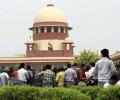
A curative petition has been filed in the Supreme Court challenging the September 23 split verdict on the Chief Election Commissioner and Other Election Commissioners (Appointment, Conditions of Service and Term of Office) Act, 2023. The petition, filed by Jaya Thakur, alleges a "reasonable apprehension of bias" due to claims that Justice Satish Chandra Sharma's son is a standing counsel for the Election Commission, raising questions about judicial propriety.

The directive comes amid concerns over steep mark-ups on medicines and medical consumables sold at hospital pharmacies.

The Delhi High Court is set to hear petitions concerning the alleged closure of Jantar Mantar as a protest site and reported assaults on protesters. Lawyers argue that the closure infringes on the right to free speech, especially as no alternative sites were designated. Separately, Delhi Police have denotified Jantar Mantar and named three new protest locations.

The Supreme Court has directed the Allahabad High Court chief justice to promptly address allegations against the presiding officer of the 2021 Lakhimpur Kheri violence case, who is accused of transferring cases to himself and acquitting defendants. The apex court also urged the Uttar Pradesh government to appoint a new public prosecutor for the high-profile trial.
